


By using our website, you agree to the use of cookies as described in our Cookie Policy
Most homeowners think a bathroom refresh means new paint and updated hardware. Swap the faucet, change the mirror, call it done. But if you're seeing the same problems crop up month after month, you're not dealing with aesthetics — you're dealing with infrastructure. And no amount of tile cleaner is going to fix what's happening behind the walls.
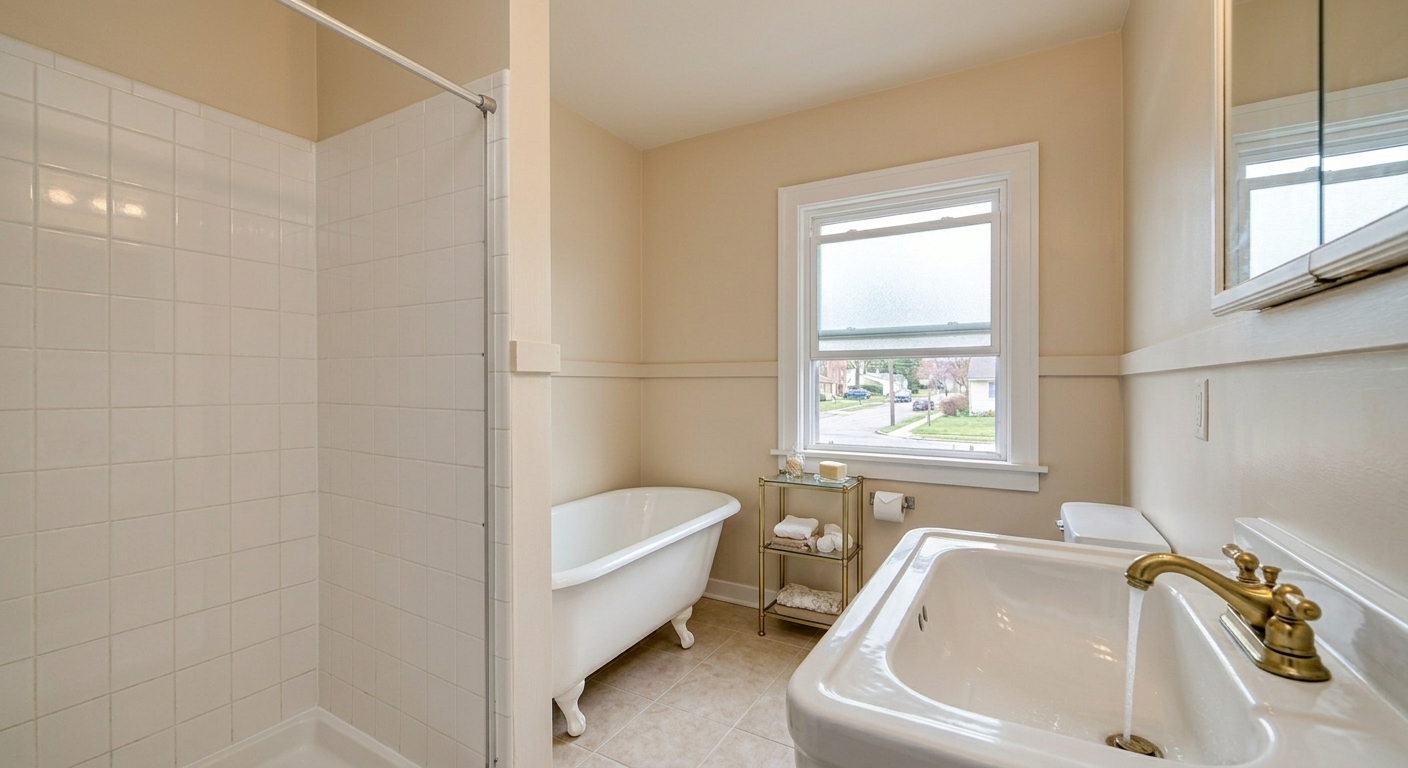
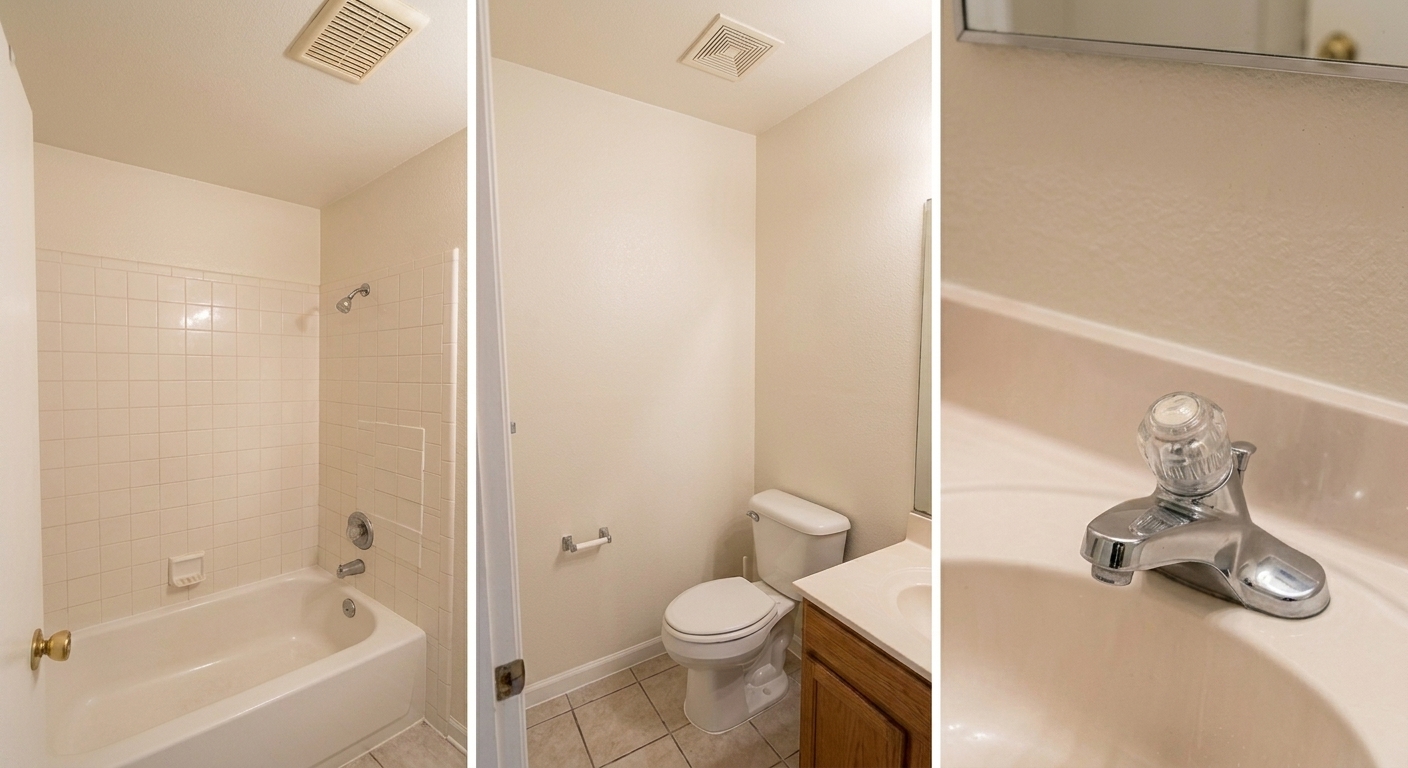
- Shower & Walls: The heavy mold has been removed, and the tile grout has been restored. All walls have been painted in a fresh, soft beige.
- Ceiling & Window: Water damage on the ceiling is fixed, and a new, clean window and frame have been installed.
- Fixtures: The vintage sink and faucet have been polished, and the clawfoot tub has been refinished to pristine white.
- Details:The damaged tile flooring has been replaced, and new accessories, such as a matching toilet paper holder, have been added to complete the space.
So here's the reality. If your bathroom keeps showing the same symptoms, something deeper is wrong. The grout might look fine. The vanity might still close. But water doesn't lie. Neither does mold. And neither does a floor that feels soft when you step out of the shower. Every issue leaves a trail — and every delay makes the fix more expensive.
Water Stains That Keep Coming Back
You paint over the ceiling stain. Two months later, it's back. That's not bad luck — that's a leak. Water damage doesn't announce itself with a flood. It creeps in through bad seals, loose grout, or aging pipe connections. By the time you see discoloration on drywall or warping on the floor, moisture has been soaking into your structure for weeks, maybe months.
Ignoring it doesn't make it go away. It makes it worse. Wood rots. Subfloors weaken. And once mold takes hold, you're not just repainting — you're ripping out walls. If water stains are a recurring theme in your bathroom, the cosmetic layer isn't the problem. What's underneath is. Professional water damage restoration can address these hidden issues before they compromise your entire bathroom structure.
Mold Shows Up No Matter How Much You Scrub
A little mildew in the corner of the shower? Normal. Mold spreading across the ceiling, creeping along baseboards, or popping up behind the toilet? That's a ventilation problem, a moisture problem, or both. Mold doesn't grow because your bathroom is dirty. It grows because it's damp — and staying damp.
You can bleach it. You can repaint. But if the conditions don't change, the mold comes back. And the longer it sticks around, the more it compromises air quality and structural integrity. We've seen bathrooms where the drywall was so saturated, it crumbled when touched. That's not a surface issue. That's a gut-and-rebuild situation requiring complete drywall installation and repair. If you're fighting mold on repeat, your bathroom needs airflow, waterproofing, or a complete overhaul — not another coat of primer.
The Plumbing Feels Like It's From Another Era
Low water pressure. Rusty water. Pipes that clang when you turn off the faucet. These aren't quirks — they're warnings. Older homes in Roseville still run on galvanized steel or outdated copper that's corroding from the inside out. You might not see the problem until a pipe bursts or a slow leak turns your wall into a sponge.
Electrical systems age too. If your bathroom outlets aren't GFCI-protected, or if you're running a hair dryer off an extension cord because there aren't enough plugs, that's a safety hazard. Upgrading plumbing and electrical isn't glamorous, but it's the foundation everything else sits on. Skip it, and you're just putting lipstick on a system that's one bad day away from failing.
- Frequent leaks or drips that won't stop
- Discolored water coming from the tap
- Outlets near water that aren't GFCI-rated
- Insufficient lighting or power for modern use
- Pipes that make noise or vibrate
Cracked Tile Isn't Just Ugly
Cracked or chipped tile might seem like a cosmetic flaw. But every crack is a doorway for water. Once moisture gets under the tile, it softens the adhesive, weakens the subfloor, and creates the perfect environment for rot. A single broken tile can spiral into a full floor replacement if the damage spreads.
Same goes for fixtures. A chipped bathtub or cracked sink isn't just hard to clean — it's a bacteria trap. And if the damage is widespread, patching one piece at a time won't solve the bigger issue. When multiple surfaces are failing, it's time to rethink the whole setup with professional tile and flooring installation, not just touch up the trouble spots.
- Tiles lifting or feeling loose underfoot
- Grout that's crumbling or missing entirely
- Cracks in the tub, sink, or shower pan
- Water pooling in corners or along edges
- Stains that won't scrub out no matter what
The Layout Doesn't Work for How You Live
A cramped vanity. No storage. A shower you have to shimmy into sideways. Poor layout isn't just annoying — it's a daily friction point. And if your bathroom was designed decades ago, it probably wasn't built with today's needs in mind. Modern life demands more counter space, better lighting, and smart storage through thoughtful cabinetry solutions. A bathroom that fights you every morning isn't doing its job.
Functionality issues also show up in flow. If the toilet is too close to the tub, or the door swings into the sink, that's not something a new mirror fixes. Real usability comes from rethinking the layout — and that means more than cosmetic changes. It means moving walls, relocating fixtures, and building a space that actually fits how you use it.
- Barely any counter or storage space
- Awkward door swing or cramped clearances
- Single sink when two would make mornings easier
- Shower or tub that feels outdated or uncomfortable
- Lighting that's too dim or poorly placed
Smells That Won't Go Away
Musty odors or sewer smells that linger after cleaning are red flags. Those smells mean moisture is trapped somewhere it shouldn't be — behind drywall, under the floor, or inside the vanity. It could also point to a plumbing issue like a dry P-trap or a vent line that's clogged or damaged.
Air fresheners and candles mask the problem. They don't fix it. If the smell keeps coming back, something's wrong with how water or air is moving through your bathroom. Tracking it down usually means opening things up and dealing with what's hidden. That's not a cosmetic project. That's a diagnostic and repair situation that requires real work.
- Persistent musty or moldy smell
- Sewage odor near drains or fixtures
- Odors that get worse after using water
- Smell that doesn't improve with ventilation
- Damp smell even when surfaces are dry
Floors That Feel Soft or Uneven
Step out of the shower and feel a little give in the floor? That's not settling. That's rot. Soft spots mean water has compromised the subfloor, and once that happens, the damage spreads fast. You might not see it, but it's there — and it's structural. This isn't something you can ignore or cover with new flooring. The base has to be rebuilt.
Uneven floors can also indicate foundation shifts or long-term water exposure that's weakened the joists. Either way, it's a sign that your bathroom has moved past the cosmetic stage and into serious repair territory. Patching the surface won't hold if the foundation underneath is compromised.
- Spongy or soft areas near the tub or shower
- Visible sagging or dips in the floor
- Tiles that shift or crack underfoot
- Walls that feel damp or soft to the touch
- Baseboards pulling away from the wall
When Cosmetic Fixes Stop Making Sense
There's a point where painting over problems costs more than fixing them. If you're dealing with recurring leaks, persistent mold, outdated systems, or structural damage, cosmetic updates won't move the needle. They'll just delay the inevitable — and drive up the cost when you finally have to deal with what's really wrong.
We've worked with plenty of Roseville homeowners who thought they could get by with a quick refresh, only to realize they were throwing money at symptoms instead of solutions. The smarter move is to assess the real condition of your bathroom, identify what's failing, and invest in a comprehensive bathroom remodel that actually solves the problem. That's how you protect your home, improve your daily life, and avoid repeating the same fixes every few years. For expert guidance on planning your project, explore our full range of services to see how we can help transform your space.
Ready to Fix What’s Really Wrong?
Let’s stop patching over the same old problems and start building a bathroom that works for you every day. If you’re tired of leaks, mold, or a layout that just doesn’t fit your life, we’re here to help you get it right the first time. Give us a call at 916-537-6269 or get a quote and let’s make your bathroom a space you can truly rely on.
‹ Back