





By using our website, you agree to the use of cookies as described in our Cookie Policy
Most Roseville homeowners think drywall damage is just cosmetic. A ding here, a crack there. But ignore it long enough and you're looking at bigger problems — moisture intrusion, structural questions, and repair bills that could've been avoided. Drywall isn't bulletproof. It dents when you move furniture. It cracks when the house settles. And when water gets behind it? That's when things get expensive.
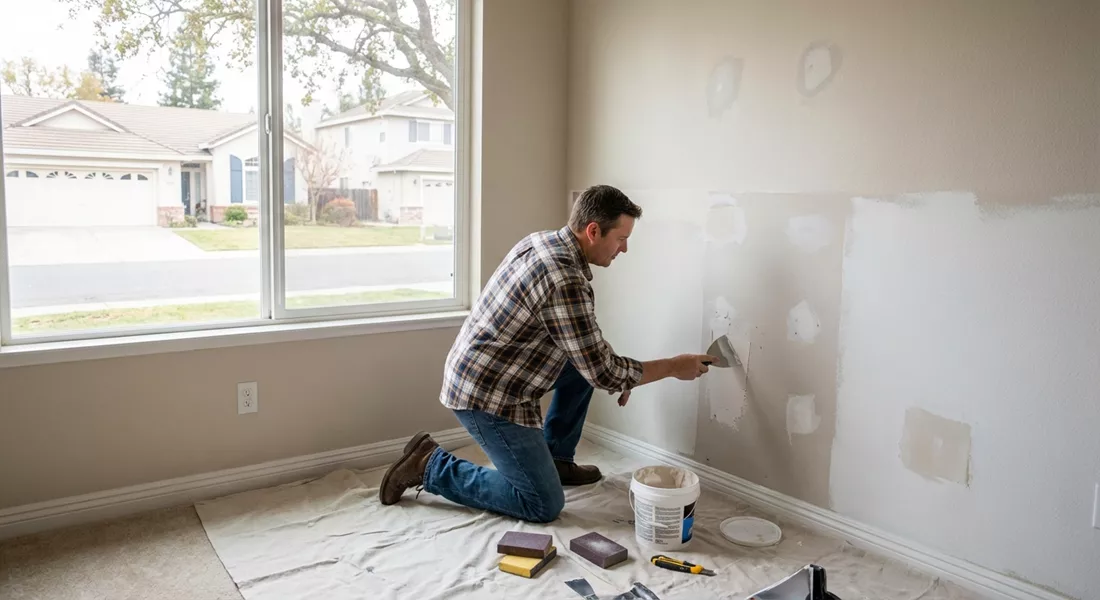
So here's the reality. If you're living in a home with walls, you're going to deal with repairs eventually. The question isn't whether damage will happen — it's whether you'll catch it early and handle it right. Every patch job should be done with the right materials. Every repair needs to match the surrounding surface. And every decision should be based on what caused the damage in the first place — not just what it looks like from across the room.
Damage Shows Up in Predictable Ways
Nine times out of ten, drywall problems fall into a handful of categories. You've got impact damage from doorknobs or furniture. You've got settling cracks that show up along seams or corners. And you've got moisture issues that turn solid gypsum into mush. The IRS doesn't care about your walls, but your home's resale value does — and so does your insurance adjuster if things escalate.
<p
But here's where it gets tricky. Not all damage is surface-level. A small water stain might mean a slow leak that's been running for weeks. A hairline crack could signal foundation movement. We see homeowners patch over symptoms without addressing the root cause — and six months later, the same spot fails again. When damage keeps coming back, the wall isn't the problem. Something behind it is.
The Repairs You Can Handle Yourself
You don't need a contractor for every scuff and scrape. Small holes and shallow dents are fair game for DIY work — as long as you've got the right supplies and a little patience. The key is knowing what you're working with and not cutting corners on prep.
Here's what most repairs break down into:
- Nail pops and screw dimples get filled with lightweight spackle, sanded smooth, then primed before paint
- Hairline cracks need mesh tape and joint compound, feathered out so the repair blends into the wall
- Small punctures under two inches can be patched with a self-adhesive mesh kit and a few coats of compound
- Larger holes require a backer board or drywall patch, screwed into place and finished with tape and mud
- Texture matching is where most people stumble — if your walls have knockdown or orange peel, you'll need to replicate it or the patch will stand out
When the Damage Runs Deeper
Want to patch a hole and move on? You'll need to make sure the surrounding drywall is solid first. If the edges are soft, crumbly, or discolored, the damage has spread beyond what you can see.
We check for three things before committing to a repair:
- The drywall around the damaged area is firm and intact, not spongy or sagging
- There's no active moisture source feeding the problem
- The framing behind the wall is dry and structally sound, not rotted or compromised
Fail one of those checks, and the patch won't hold. Even if it looks fine for a few weeks. And if moisture is involved? That section needs to be cut out and replaced, not just covered up. No shortcuts when mold or rot is in play.
Roseville Homes Have Their Own Quirks
If your house was built before 1980, there's a chance you're dealing with plaster instead of drywall. Different material, different repair approach. Plaster cracks differently. It holds fasteners differently. And patching it requires a bonding agent most hardware stores don't stock on the main aisle.
You'll also run into textured ceilings that haven't been updated in decades. Popcorn texture is a pain to match, and scraping it off can release asbestos if the house is old enough. That's not a DIY project — that's a call to someone with the right certifications and containment setup.
The Tools That Actually Matter
Most homeowners own a putty knife and think that's enough. It's not. You need the right width blade for the job, a hawk to hold compound, and a sanding block that won't gouge the surface when you smooth things out.
Here's what belongs in your repair kit:
- A six-inch taping knife for applying compound
- A utility knife with fresh blades for cutting drywall and trimming mesh
- A sanding sponge or pole sander for smoothing without creating dust clouds
- Primer designed for drywall, not just leftover wall paint
- Joint compound in the right consistency — pre-mixed for small jobs, powder for bigger ones
Where Homeowners Usually Mess Up
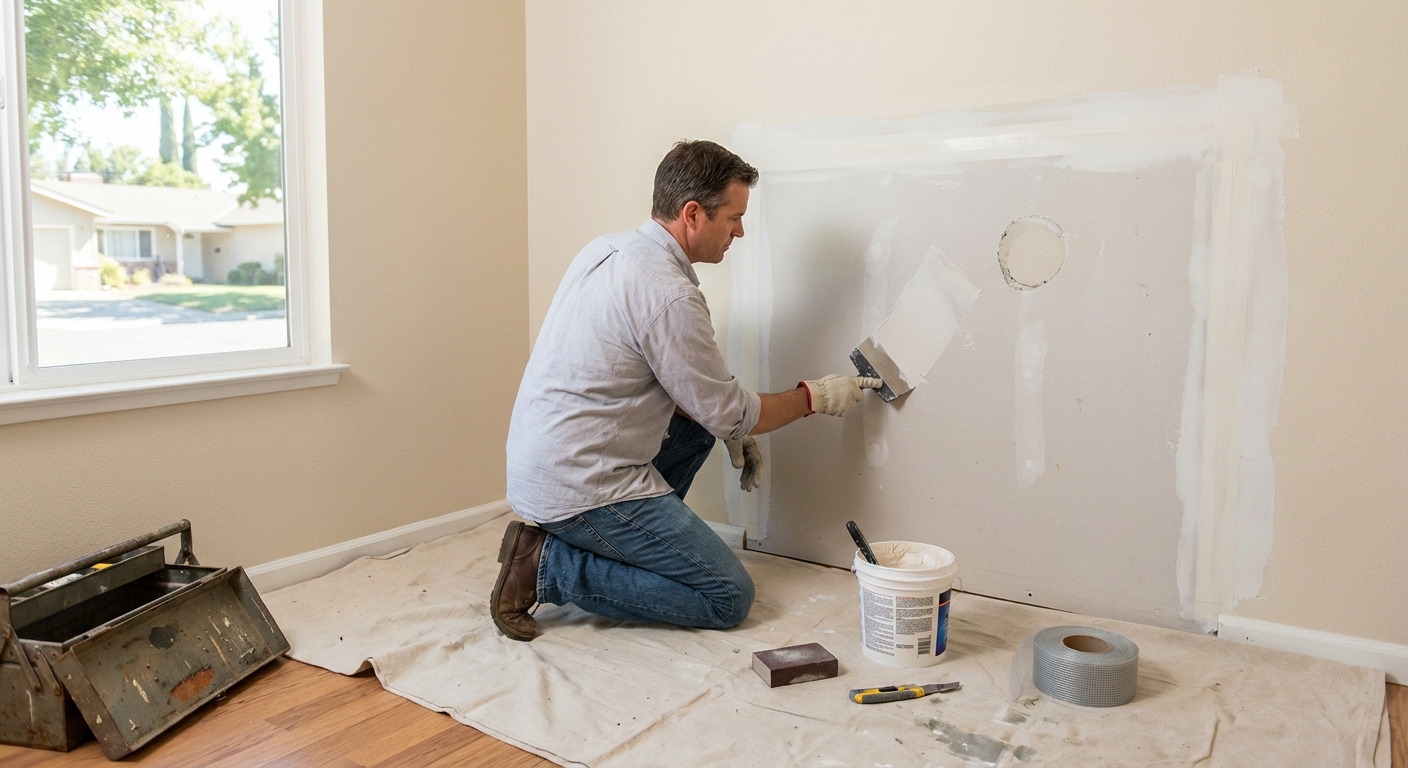
Slapping spackle into a hole and calling it done is the fastest way to end up repainting the same spot twice. Drywall repair isn't complicated, but it does require patience. Most mistakes happen because someone rushed the drying time or skipped a step.
Skipping the Primer
Trying to paint directly over a fresh patch? The compound will absorb paint differently than the surrounding wall, leaving a dull spot that screams "repair." Primer seals the surface and gives you a uniform base. It's not optional.
Overloading the First Coat
Piling on compound to fill a deep hole in one pass just means it'll crack as it dries. Thin layers work better. Let each one cure fully before adding the next. It takes longer, but the finish holds.
Ignoring the Cause
If you patched a water stain without fixing the leak, you're wasting your time. Same goes for cracks that reappear every spring. Drywall damage is usually a symptom, not the disease. Address what's causing it or you'll be back at the hardware store in six months.
Calling In the Pros Makes Sense Sometimes
If the damage covers more than a few square feet, involves electrical or plumbing, or keeps recurring no matter what you try, it's time to bring in someone who does this for a living.
A contractor helps you:
- Identify hidden damage behind the wall that you can't see from the surface
- Match textures and finishes so the repair disappears into the rest of the room
- Handle mold remediation if moisture has been sitting long enough to grow colonies
- Pull permits if the work involves structural changes or code compliance
- Get it done in hours instead of weekends, with tools and materials you don't need to buy
Repairs That Hold Up Start With Honest Assessment
Fixing drywall isn't the hard part. Doing it right — so it doesn't crack, sag, or show through the paint six months later — that's where homeowners get tripped up. There's no excuse for sloppy work when the materials are cheap and the techniques are straightforward. But there's also no point in patching over a problem that's going to come back worse.
We help Roseville homeowners figure out what's worth fixing themselves and what needs a second set of hands. Professional interior painting can ensure your repaired walls blend seamlessly with the rest of your home. If you're dealing with extensive damage that affects multiple rooms, our bathroom remodel and kitchen remodel services can address structural issues while upgrading your space. For water-related drywall damage, our water damage restoration team can identify and remediate the source before repairs begin. Learn more about our comprehensive services or contact us to discuss your specific repair needs. Because a clean repair today beats a full wall replacement next year — and knowing the difference is half the battle.
Let’s Restore Your Walls the Right Way
We know how frustrating it is to see cracks and dents keep coming back, and we’re here to help you get your home looking its best again. If you’re ready for repairs that last and want a team that treats your home like their own, give us a call at 916-537-6269. When you’re ready to take the next step, get a quote and let’s make your walls look new again.
‹ Back