


By using our website, you agree to the use of cookies as described in our Cookie Policy
Most homeowners think fixing things is cheaper than replacing them. Patch the leak, paint over the crack, swap out the broken fixture. But there's a point where repairs stop being smart and start being expensive denial. The house isn't getting better — you're just buying time. And if you're not careful, that time costs more than tearing it all down and doing it right.
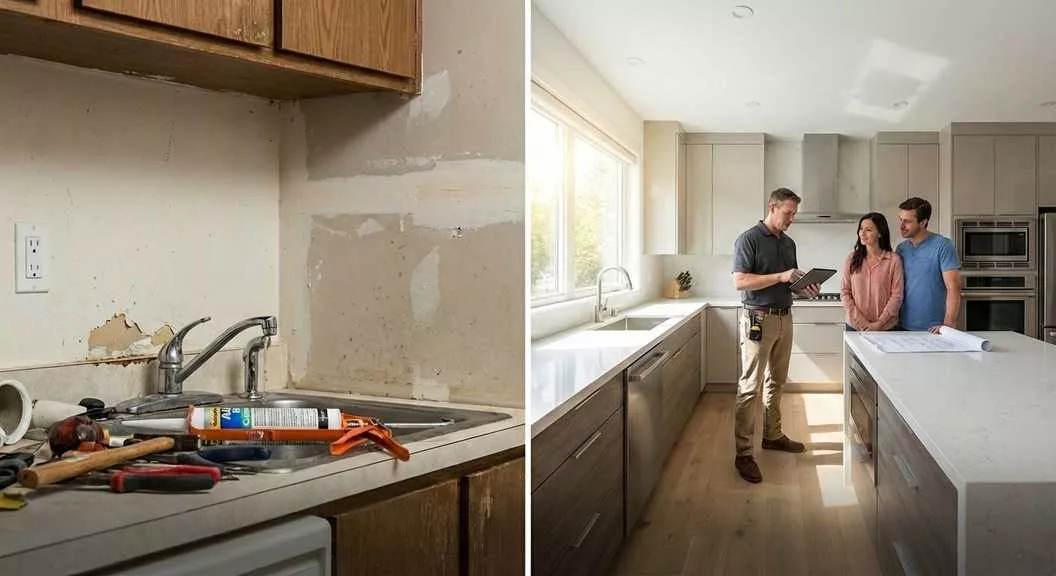
So here's what matters. If you're throwing money at the same problems every six months, that's not maintenance. That's a symptom. And the longer you ignore what's underneath, the worse it gets. Every bandaid you slap on is another dollar you won't get back when the real work finally starts.
Repairs Buy Time, Renovations Buy Peace
Repairs handle the surface. A cracked tile here, a dripping faucet there. They're quick, they're cheap, and they make you feel like you're staying on top of things. But they don't fix the root cause. If your plumbing keeps backing up or your electrical panel keeps tripping, you're not dealing with bad luck — you're dealing with a system that's done.
Renovations go deeper. They replace what's failing, upgrade what's outdated, and give you a foundation that actually works. You're not just covering up the problem. You're eliminating it. And that's the difference between spending smart and spending twice.
When the Bills Start Piling Up
If you're calling contractors every season for the same issues, add up what you've spent. Most people don't — and that's why they keep paying. A few hundred here, a thousand there. It feels manageable until you realize you've dropped five figures on a house that still doesn't work right.
At some point, the math flips. A full renovation might cost more upfront, but it stops the bleeding. No more emergency calls. No more surprise failures. Just a house that functions the way it's supposed to.
The Red Flags You Shouldn't Ignore
Some problems announce themselves loud and clear. Others creep up slowly until they're too big to ignore. Either way, if you're seeing these signs, repairs won't cut it anymore.
- Foundation cracks that keep spreading no matter how many times you seal them
- Mold that returns within weeks of being cleaned
- Electrical panels that can't handle modern appliances without tripping
- Plumbing that backs up or leaks in multiple spots
- HVAC systems that can't keep up no matter how much you service them
Outdated Systems Cost More Than You Think
Old wiring, ancient plumbing, inefficient heating — these aren't just inconveniences. They're liabilities. Outdated systems break more often, cost more to run, and put your home at risk. Insurance companies know this. So do buyers. And so should you.
Renovating gives you the chance to rip out what's failing and install what actually works. Modern electrical that handles your load. Plumbing that doesn't corrode. HVAC that doesn't spike your utility bill every month. It's not glamorous, but it's the stuff that keeps a house standing.
Your Life Changed, Your House Didn't
Maybe you bought the place ten years ago when it was just the two of you. Now there are kids, aging parents, or a home office that didn't exist before. The layout doesn't work anymore. The space feels cramped. And no amount of furniture rearranging is going to fix it.
Renovations let you reconfigure the bones of the house to match how you actually live. Add a bedroom. Open up the kitchen. Build accessibility features that let you age in place. These aren't luxuries — they're adjustments that make your home functional again.
What a Smart Renovation Actually Covers
Not every renovation needs to be a gut job, but the good ones address more than cosmetics. If you're going to invest, make sure you're hitting the systems and structures that matter most.
- Replacing outdated electrical panels and wiring to meet current code
- Upgrading plumbing to prevent leaks and improve water pressure
- Installing energy-efficient windows and insulation to cut utility costs
- Reconfiguring layouts to improve flow and functionality
- Addressing structural issues like sagging floors or compromised framing
Resale Value Isn't Just About Granite Countertops
Buyers care about pretty kitchens and spa bathrooms, sure. But they care more about whether the house is going to fall apart in five years. A home with updated systems, solid bones, and no deferred maintenance? That's what moves fast and gets top dollar.
If you're planning to sell, a renovation can be the difference between sitting on the market and getting multiple offers. Just make sure you're investing in the right things — the stuff that buyers actually check during during inspections. Professional remodeling services can help you prioritize upgrades that deliver the best return on investment.
How to Know If You're Ready
Before you commit to a full renovation, get a professional assessment. Not a contractor trying to upsell you, but someone who can give you an honest read on what's failing and what's not. A good inspector or structural engineer will tell you where the real problems are — and whether repairs can actually solve them.
Once you have that information, run the numbers. Compare the cost of ongoing repairs over the next five years to the cost of a renovation today. Factor in energy savings, reduced maintenance, and increased home value. Most of the time, the renovation wins.
What Your Documentation Should Include
If you move forward with a renovation, keep every receipt, permit, and inspection report. You'll need them for insurance, resale, and your own peace of mind. And if you're financing the work, lenders want to see a clear paper trail.
- Signed contracts with scope of work clearly outlined
- Permits pulled and approved by local building departments
- Invoices and payment records for all materials and labor
- Before and after photos documenting the work completed
- Final inspection reports confirming code compliance
Smart Moves That Protect Your Investment
Timing matters. Addressing issues early keeps repair costs manageable and prevents small problems from becoming expensive ones. When it comes to structural work or major systems like electrical and plumbing, hiring licensed professionals protects both your safety and your home's value.
Keep your neighborhood in mind when planning upgrades. If homes on your street typically sell for $300K, a $200K renovation won't return your investment. The sweet spot is improving your home to match or slightly exceed what buyers expect in your area.
Financing Options That Actually Work
- Home equity loans or lines of credit that use your home's value as collateral
- Cash-out refinancing if rates are favorable and you have enough equity
- Personal loans for smaller projects that don't require home collateral
- Contractor financing programs that offer payment plans or deferred interest
- Government-backed renovation loans like FHA 203(k) for major overhauls
Many reputable contractors offer financing options that make major renovations more accessible without the stress of upfront costs.
When to Bring in a Pro
If you're dealing with structural issues, outdated systems, or anything that touches code compliance, don't guess. A qualified contractor or architect can help you plan the work, pull permits, and make sure everything gets done right. They'll also catch problems you didn't know existed — and that's worth the cost.
Look for pros with solid references, proper licensing, and insurance. Ask for a detailed estimate that breaks down labor, materials, and timelines. And don't hire the cheapest bid. Hire the one who understands what you're trying to accomplish and has the track record to back it up. Reviewing client testimonials can give you insight into a contractor's reliability and quality of work.
Building Smart Means Spending Once
Renovations aren't cheap. But neither is fixing the same problem over and over while your home slowly falls apart. At some point, you have to decide whether you're maintaining a house or just delaying the inevitable. The right renovation stops the cycle, gives you a home that works, and sets you up for years of stability instead of constant crisis management. Whether you need bathroom remodeling, interior painting, or comprehensive home updates, investing in quality work now means you won't be paying for the same repairs again next year.
Ready to Start Fresh?
We know how overwhelming it can feel when your home needs more than just another patch job. If you're ready to stop the cycle of endless repairs and invest in a renovation that truly transforms your space, let's talk about your goals and how we can help. Give us a call at 916-537-6269 or get a quote today—together, we'll make your home work for you again.
‹ Back